What can you do at home to save water?
Water is extremely valuable
It is therefore important to put measures in place that involve not only the installation of high-performance equipment, but also a change in habits.
Turning on the tap to brush your teeth. Having a shower. Putting the washing machine on. These are all ordinary, everyday actions carried out without a second thought. Yet each of these actions is linked to an essential resource: water.
With global warming, the climate in Geneva could, by 2090, resemble that of Puglia in southern Italy, according to a projection based on forecasts by the Intergovernmental Panel on Climate Change (IPCC) and the so-called ‘climate twins’ approach ’.
Against this backdrop, protecting and conserving water is a priority.
In 2023, 58 million m³ of drinking water – the equivalent of more than 23,000 Olympic-sized swimming pools – was distributed throughout the canton.
The domestic sector alone accounts for 89 per cent of consumption. Watering gardens, at 5 per cent, ranks ahead of agriculture (3 per cent) and industry (2 per cent).
In Geneva, per capita drinking water consumption in multi-occupancy dwellings stands at 142 litres per day. The Geneva Industrial Services (SIG) state: “On average, a Geneva household consumes 120 m³ per year. Consumption varies greatly between households depending on their commitment to sustainable development. A rough guide to bear in mind is that a household living in a detached house consumes more than one living in a flat. This difference is largely due to watering.”
Despite continuous population growth, water consumption stabilised around the 1980s before declining over the last thirty years. This situation can be attributed to more water-conscious behaviour on the part of consumers, more water-efficient equipment and awareness-raising campaigns, particularly amongst younger people.
Just as with energy sources such as heating oil, gas and electricity, water can be conserved.
Mr Alexandre Poncy, Head of the Technical Department for Institutional and Commercial Management at Moser Vernet & Cie, explains: “In recent years, estate agents have focused primarily on heating due to the Energy Act and the Heat Expenditure Index (IDC). Price rises in 2023 – 16 per cent for natural gas and 18 per cent for electricity this year – have reinforced this approach.”
Until now, efforts to save water have remained limited due to its low price. In Geneva, it costs between 1.50 and 2.80 francs per 1,000 litres. Furthermore, tenants are not charged for cold water.
A production company that is committed
However, growing environmental awareness is changing the landscape. “As a property management company,” explains Mr Alexandre Poncy, “when we carry out flat renovations, we install fittings that help reduce water consumption, such as aerators and mixer taps. Appliances for new homes or when replacing existing ones are chosen based on their energy and water consumption.”
But the approach goes even further, as the property management company regularly monitors water consumption in the buildings it manages.
Signa-Terre, a specialist in sustainable property strategy, is a long-standing partner of the property management company Moser Vernet & Cie.
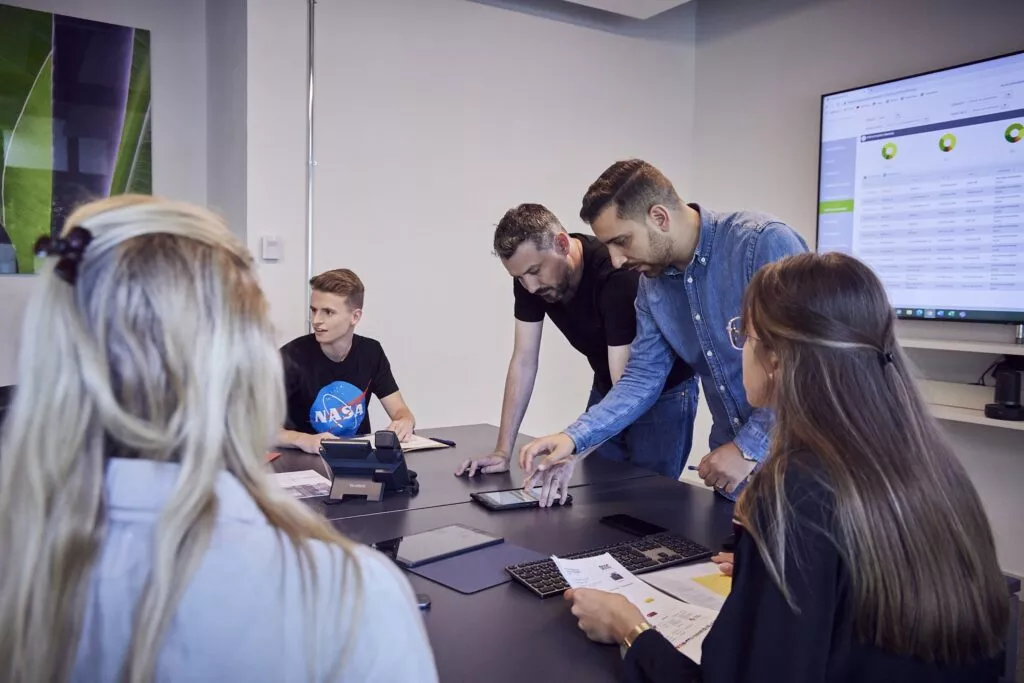
Mr Guillaume Gangneux, who is responsible for scheduling property inspections at Signa-Terre, explains: “We provide the property management company with precise data on the monitoring and control of energy flows in its buildings. This technical monitoring also covers water consumption. If consumption shows an abnormal increase or decrease, the property management firm is alerted immediately. This enables them to identify the causes and take swift action.”
The investigation begins with a comprehensive check of taps and toilet cisterns. Even a tiny leak from a cistern can result in the loss of several hundred litres of water a day.
Simon Lefort, manager in charge of residential and co-ownership property management, explains: “If no anomalies are detected, we then install a camera on the water meter. This will continuously monitor consumption. For example, high consumption during the night indicates a leak in the pipework.”

Parting the waters
In recent years, Geneva has embarked on major works to separate rainwater from domestic wastewater – that is, from showers, baths and the kitchen.
Simon Lefort explains: ‘Previously, they were collected and treated together, which led to the sewage treatment works becoming overloaded. Separation prevents this congestion because rainwater, which is untreated, is discharged directly into a watercourse or the lake.”

Smart tips
Whether you’re a tenant or the owner of a house or flat, there are a few steps you can take to significantly reduce your water consumption. For example, by adopting eco-friendly daily habits and installing simple, inexpensive devices, particularly on taps and in the shower.
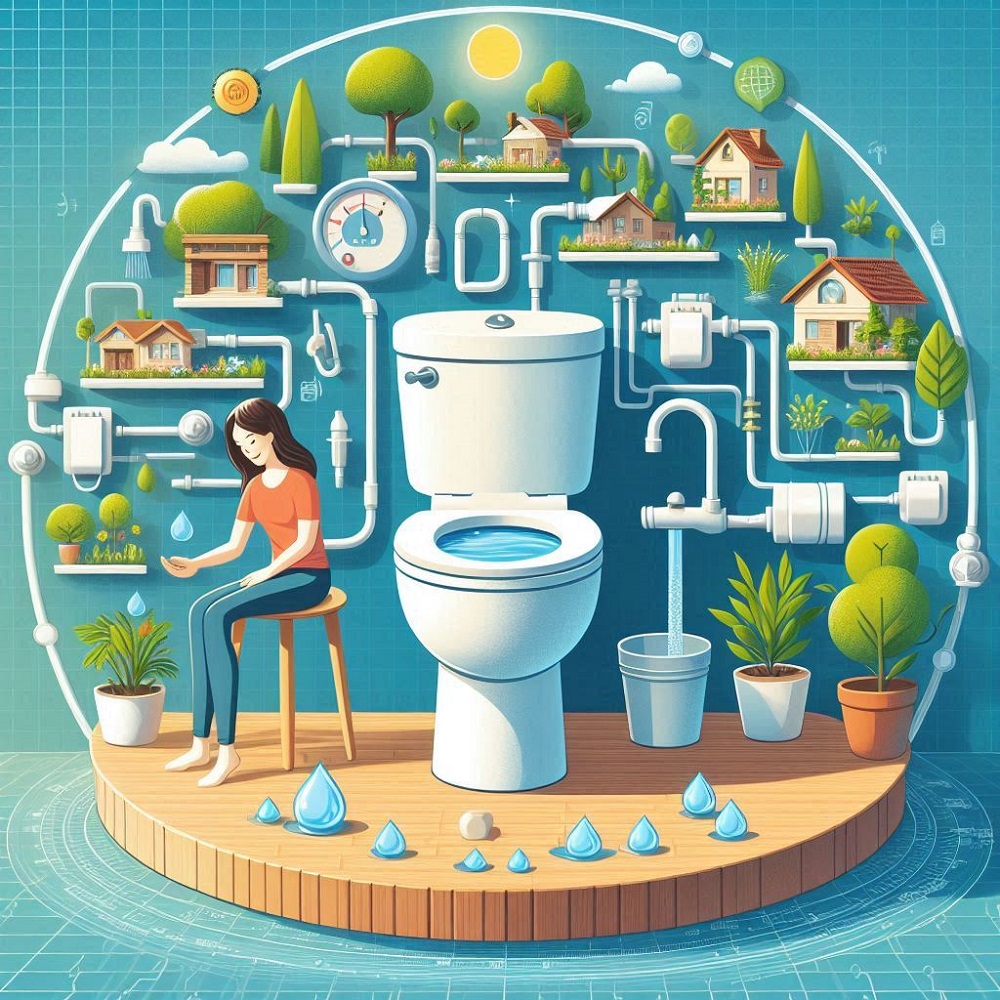
Toilets are the biggest water guzzlers. They use 42 litres of water per person per day, which accounts for 30 per cent of per capita consumption.
However, they also offer a significant opportunity for savings through the installation of dual-flush toilets. This system uses between three and six litres per flush, compared with nine to twelve litres for a single-flush toilet.
If the flush mechanism is old, pushing the button back up after flushing stops the process and saves water. There are also various systems available on the market that are simple to install. The most common is a small metal cylinder that adds weight to the water shut-off mechanism. This prevents the cistern from emptying completely with every flush.
Baths and showers, for their part, account for 26 per cent of water consumption, at 37 litres per person per day. But it’s better to sing in the shower than in the bath! A full bath requires between 200 and 250 litres of water. This figure drops to between 125 and 150 litres for a half-full bath. But the most economical option remains the shower, which uses around 15 litres per minute. This can be improved further by fitting a water-saving shower head, which reduces the flow rate to as little as 5 litres per minute. The shower experience remains just as comfortable because the water stream is enriched with air. Note: the most water-efficient models are rated ‘A’ on the energy label.
Showering should not take longer than five minutes, and you should turn off the tap whilst soaping yourself. This is a habit worth adopting at the washbasin too, as washing at the washbasin accounts for 11 per cent of a household’s water consumption. Furthermore, fitting a water-saving device to a tap reduces the flow rate and cuts consumption by 30 to 50 per cent.
A handy tip: if the tap has a mixer tap, move the lever to the right when you’ve finished, which prevents hot water from running when you next use it.
Long live eco-friendly programmes!
Washing up by hand or in the dishwasher? The answer is clear: the dishwasher. In fact, washing up by hand can use up to 200 litres of water, whereas a modern dishwasher uses less than 10 litres and less than one kilowatt-hour of electricity for a family’s daily washing-up.
When washing by hand, you can reduce water consumption by using two bowls: one for washing and the other for rinsing. The order in which you wash items also matters: glasses, plates and cups, cutlery, plastic items, and then saucepans.
Meanwhile, the washing machine’s water consumption accounts for 12 per cent of the 142 litres of water used per person each day. The appliance uses 17 litres a day, so you should avoid running it when it’s only half full.
For both the dishwasher and the washing machine, eco programmes should be prioritised. These programmes take significantly longer than a standard cycle because the water is heated gradually. This slow rise in temperature saves up to 40 per cent of energy. The amount of water used is also reduced.
A lovely lawn, a terrace or balcony adorned with plants, green spaces around the building… These areas can be maintained whilst saving water.
Watering a garden is estimated to use between 15 and 20 litres per square metre, or around 2,000 litres a year for an area of 100 m². Mowing the grass to a height of between 6 and 8 cm results in a hardier lawn and requires far less water.
A simple and effective tip: install rainwater collection tanks at the bottom of the guttering.
When watering, opt for drip irrigation systems, micro-sprinklers and porous hoses, which use less water than standard sprinklers.
The time of day is also important: water early in the morning or late in the evening to avoid excessive evaporation caused by the heat.
Choosing traditional clay pots, which release water through capillary action, also helps to save money
What about tomorrow?
Rainwater, which amounts to around 900 mm per year in Geneva, is an important resource to be harnessed.
In future, it could therefore be used for toilets and green spaces.
In new buildings, the installation of a rainwater harvesting system would allow it to be used for cleaning areas that do not require drinking water.
The widespread adoption of showers instead of baths is also a major trend in new builds.
"Moser Vernet & Cie is fully committed to this approach by making the most cost-effective choices when it comes to electricity and water consumption."
Photographs:
Signa-Terre
Mr Alexandre Poncy, Head of Technical Services for Institutional and Commercial Property Management
shutterstock
Mr Simon Lefort, Manager responsible for residential and co-ownership property management
Are you interested in this article?
Sign up to receive our articles by email
You might also be interested in these articles

Did you know? The Geneva Natural History Museum is expanding
Geneva’s most beautiful eco-neighbourhoods