
Everything you need to know about housing co-operatives
The property market remains tight and rents are high. Against this backdrop, housing co-operatives are experiencing growing popularity in French-speaking Switzerland, particularly in the Lake Geneva region. This non-profit housing model offers an attractive alternative, providing homes at rents below market rates. The development of such housing is now supported by the cantons.
A more sustainable and participatory approach
These highly dynamic housing co-operatives also embody a new vision of housing, with a focus on sustainability and greater community involvement. They are also helping to reshape the city through numerous innovative architectural projects – some of which have won awards – as well as contributing to the development of a society based on solidarity and environmental awareness.
Housing co-operatives are not a new concept in Switzerland. The years immediately following the end of the First World War were marked by the establishment of several housing co-operatives. These emerged against a backdrop of social tension, fuelled by demands for a 48-hour working week, old-age pension schemes, women’s suffrage and the provision of social housing. Switzerland was then experiencing a severe housing crisis. In an effort to defuse the situation, the federal and cantonal authorities undertook to grant mortgage loans at preferential rates. “This decision paved the way for public funding,” explains Raphaël Conti of the Foundation for the Promotion of Affordable Housing and Cooperative Living (FPC). “It led to the creation of housing cooperatives throughout Switzerland, often modelled on the garden city concept.” In Geneva, for example, this was the case with the Genève Housing Cooperative (1919), whose success stemmed from a delicate alliance between politicians, trade unions and employers.

The rise of housing co-operatives
The end of the Second World War marked the first surge in cooperative housing, thanks to financial support approved by the Swiss Confederation. The aim at the time was to develop housing. This support made it possible to set up cooperative organisations. In the 1950s and 1960s, a great many co-operative housing schemes were thus established. Between 1946 and 1960, figures show there were 9,123 housing co-operatives, a number that had been rising steadily since 1919.
“In the 1950s and 1960s,” explains Raphaël Conti, “many trade-based co-operatives were established. These included, for example, those for printers, the building trades and federal government employees. These co-operatives still exist in Geneva and are still building a few blocks of flats. Notably, Les Ailes, which was founded in 1955 by Swissair employees at Geneva Airport.”
From the 1970s and 1980s onwards, co-operatives aimed more broadly at the general public began to emerge.
The 21st century: a time of renewal
The movement had subsequently lost some of its momentum, but it has been experiencing a real boom since the early 2000s. In 2015, a survey was carried out in the canton of Vaud to understand residents’ perceptions and aspirations regarding housing. The findings showed that four in ten tenants are interested in co-operative housing. Over the last ten years, the number of housing co-operatives has risen by 30 per cent in the canton, with more than 40 new co-operatives being set up.
The trend is the same in Geneva. In 2016, the canton adopted the ‘Cooperatives’ action plan to encourage their development. Currently, the canton has 128 housing cooperatives, representing 12,000 homes. Of these, 1,650 were built over the last ten years, representing a 16 per cent increase. These co-operatives therefore own around 7 per cent of the canton’s rental housing stock and 5 per cent of the total housing stock.
The proportion of co-operative housing could increase further. The popular initiative ‘For More Co-operative Housing’ proposes to double the number of non-profit homes in the canton, bringing them to 10 per cent of the rental housing stock by 2030, which would represent an additional 10,000 homes.
A co-operative is a form of housing that lies between renting and freehold ownership, based on the purchase of shares. Its aim is to provide housing for its members at the best possible price.
How does a co-operative work?
How do I become a tenant-member?
All housing co-operatives offer rents that are, on average, between 15 and 20 per cent lower than those for conventional housing. This price difference is due to the fact that they are not-for-profit organisations. Rents are intended solely to cover the co-operative’s running costs. The co-operative is open to everyone, but tends to attract a middle-class clientele.
In practice, there are two models. Raphaël Conti explains: ‘The first applies to the majority of co-operatives, particularly in older buildings. The prospective tenant submits a housing application to a co-operative and then becomes a member at the same time as being allocated a flat.
The second model is more typical of so-called participatory co-operatives. In these new structures, the prospective tenant first becomes a member. They purchase a share, usually costing between 100 and 500 francs. This share does not secure a tenancy, but places them on a waiting list. Depending on the projects taking shape, the co-operative contacts the member to find out whether they are ready or keen to work on a project. They then join a working group and are set to become a future tenant.”
What if we set up a co-operative?
Setting up a housing co-operative takes a lot of time and energy. But the main legal formalities are straightforward:
- seven founding members,
- drafting of the articles of association,
- registration of the co-operative with the Companies Register,
- development of a viable housing project.
Claire-Lise Stehlé is one of the founding members of the Voisinage co-operative in the canton of Geneva. “We were a small group of young people and those approaching retirement. We wanted to set up an intergenerational co-operative in a new neighbourhood to make a difference, because housing is about more than just the four walls of a home.”
The venture began in 2008 with the creation of Voisinage. In 2012, the co-operative secured the surface rights to a plot of land in the new Vergers eco-neighbourhood in Meyrin.
Claire-Lise Stehlé explains: “Finding the plot of land was the hardest part. But Meyrin launched a competition aimed at participatory co-operatives, offering land for their use.” In 2019, the first tenant-members moved into their homes.
The 55 Voisinage homes form part of a block comprising a total of 190 flats, built in collaboration with the Codha housing co-operative. “We worked on developing the project with the municipality of Meyrin and Codha, and we were supported during the construction phase by a property management firm with extensive knowledge of the area.”
Today, the co-operative manages the property itself. “It’s more complicated,” admits Claire-Lise Stehlé. “But it creates bonds between the tenant-members. We are no longer mere consumers, but active participants in our community.”
Bold architectural designs
Many housing co-operatives are committed to high-quality development and innovation, whether in terms of architecture, energy efficiency or social issues.
Stéphane Fuchs, a Geneva-based architect and head of the firm Atba SA architecture + énergie, has designed several buildings for participatory housing co-operatives. “These are always unconventional projects. We work from the outset with the future tenant-members who will be living with the architectural choices they make. Meetings usually involve between 15 and 30 people, and each participant puts forward interesting ideas which we examine carefully. Then, based on the specifications, we set priorities with the aim of incorporating as many of these ideas as possible. As the housing is subsidised, it is essential to stay within the set budget.”
Every building is unique, reflecting the sensibilities of its residents, who are the driving force behind the project. However, three common features remain:
- the presence of a large communal room
- guest bedrooms for accommodating visitors
- a communal storeroom
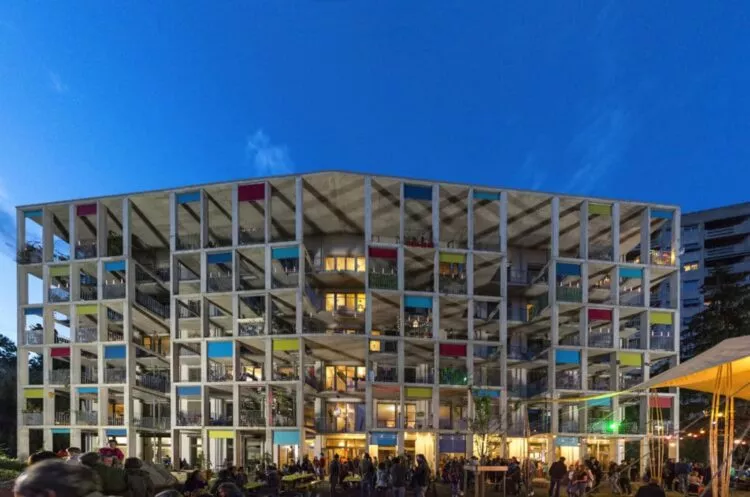
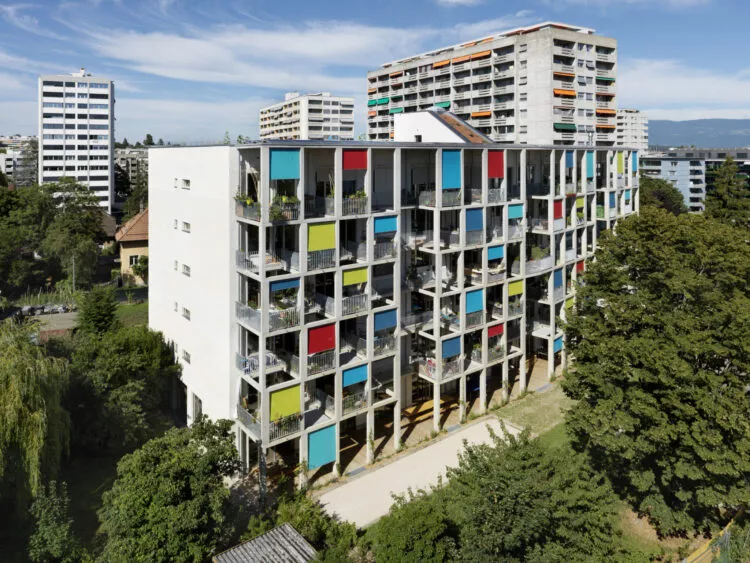
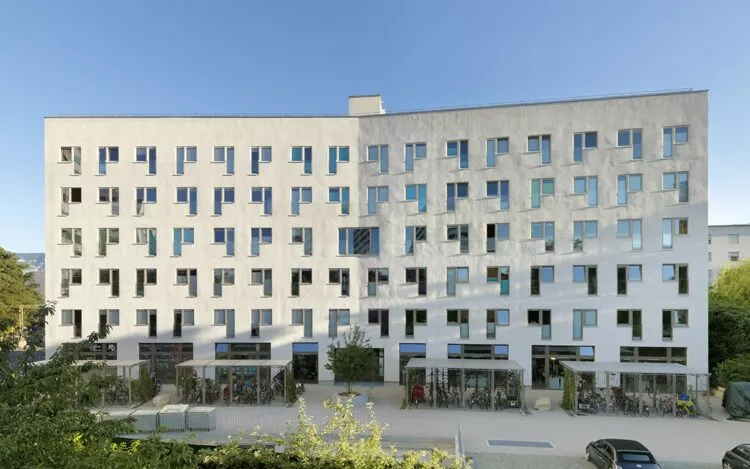
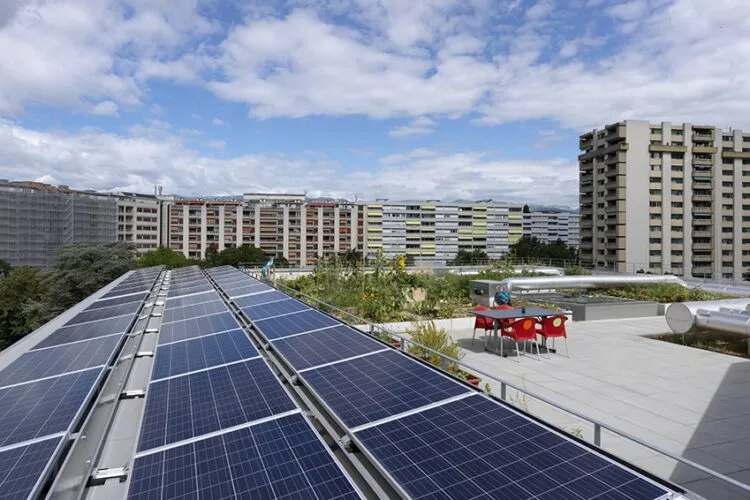
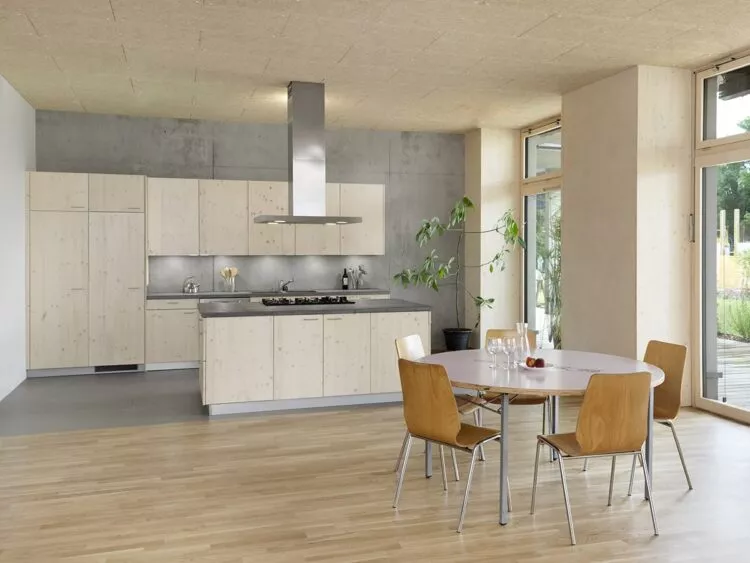
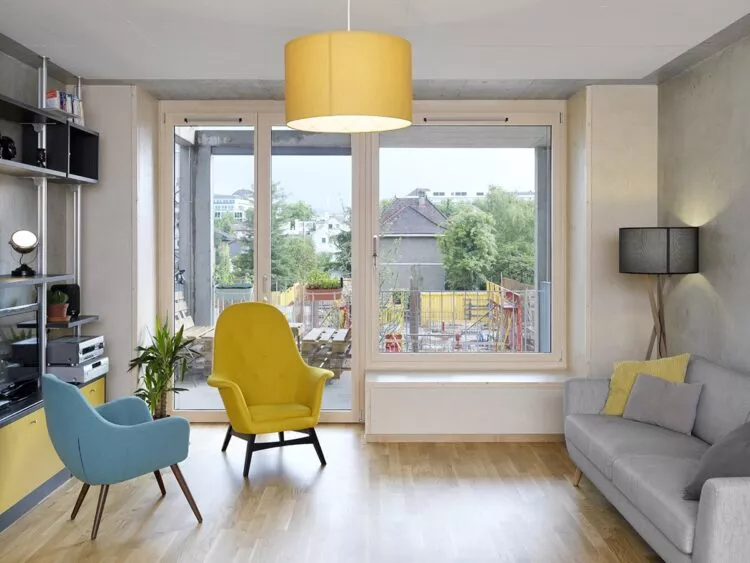
Source of photographs: Atba SA
Stéphane Fuchs adds: “There are also communal areas designed to encourage people to meet. For example, a communal entrance hall with sofas, or the layout of the balconies, which allows tenants to see and talk to one another.”
The majority of participatory co-operatives are committed to a sustainable approach, notably through the choice of materials such as wood or even straw. The latter is used as insulation.
Living in a housing co-operative
Affordable rent remains the main motivation for tenant-members. Caroline, 47, who is divorced with one child, explains. “I applied for social housing and was offered a co-operative flat. I wasn’t familiar with this system. I’m not very involved and I don’t go to many meetings, but I’ve noticed that all the co-operative members treat the building with respect. Perhaps because everyone owns a share in it. I also find it very satisfying to be able to take action to change certain things. For example, installing motion-sensor lights or digital entry systems.”
For Marie-Claude, a tenant-member of a co-operative in Geneva for over 10 years, the choice was both financial and social. “I wanted to choose where I lived and heard about this type of housing from a friend. The co-operative where I live reflects my environmental and social values: timber construction, minimal heating, eco-friendly cleaning products, composting toilets, a permaculture garden, a phytopurification pond and a rent of 1,800 francs for a six-room flat.”
Life in the co-operative relies on personal involvement, both during the project’s planning and in day-to-day life. “You have to get stuck in. There’s no property management company to call to sort out problems. We have lots of meetings, which take up time, but it’s fun and we’re very close-knit. With children, it’s perfect. They have a sort of extended family.”
Ultimately, perhaps this is a way of reinventing neighbourly camaraderie.

Are you interested in this article?
Sign up to receive our articles by email
You might also be interested in these articles
Geneva’s most beautiful eco-neighbourhoods

Fitting an electric car charging point at home?
The keys to a successful energy-efficiency renovation